
Business Day
16 October 2026
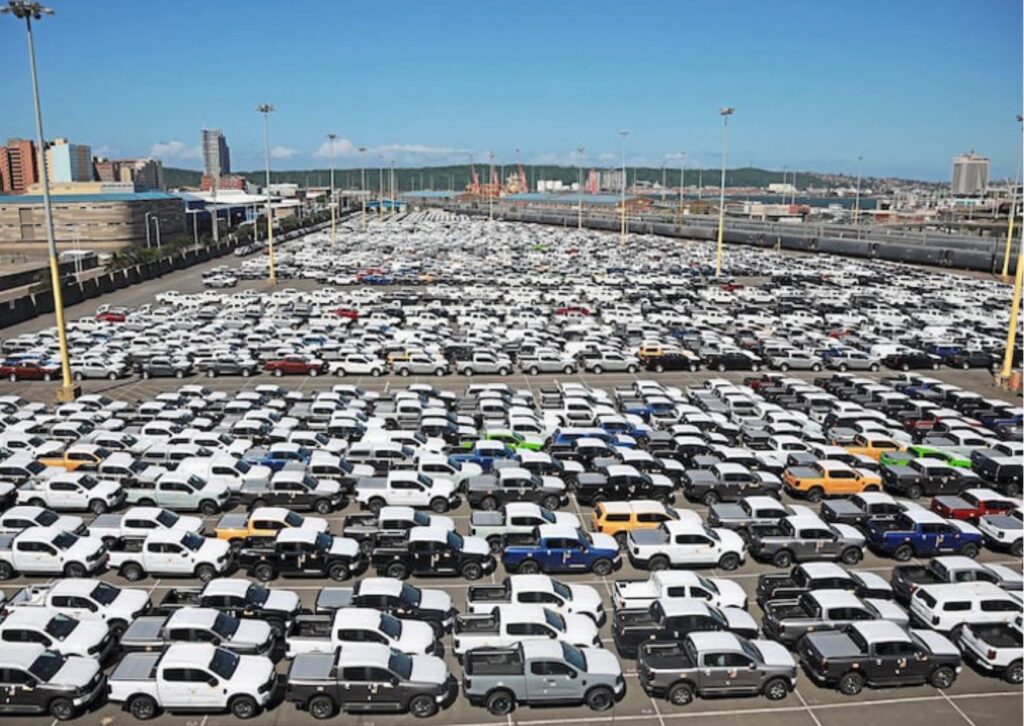
The Paris Motor Show and the South African Automotive Week held by auto-industry lobby, NAAMSA happened in the same week this year. Miles and continents apart, the two convenings shared a similar serving of existential dread. As both the European and South African industries contend with a ‘different’ world. The South African auto talk shop and its associated soiree, happened as the local industry finds itself at an ‘inflection point’. Volumes assembled, local content and the share of local demand enjoyed by those who make cars here; all declined in the last decade or more. The European market is not in better shape either.
If despondency is not a strategy, it is worth considering what we make of this crisis, and how, while geographically distant, the two industries’ fortunes are interwoven. This can be seen in a few features of the world market for automotive vehicles that influence how it is policy may wish to respond.
Firstly, the entire business and investment cases (and underlying model choices for export) for assembly activities in South Africa have been based on ‘assumptions’ that now tenuously hold. Benefitting from preferential trade access to the Eurozone and the UK, South African producers have relied on export volumes to a European Union that is finding its own impulse for ‘autarky’. The European Union and the United Kingdom are a destination market for just shy of two thirds of total South African automotive exports. Yet the ability of Europe to ‘absorb’ these imports is tempered by shifting consumer choice (towards new hybrid technologies) and low demand. The EU imported over 300 000 hybrid vehicles in 2025 from China, up nearly three-fold from the comparable figure a year earlier. As the economic bloc becomes an ‘outlet’ for an involution-driven price war in the Chinese domestic market for cars. So too is the challenge confronting European assemblers who are reeling from the market encroachment;
‘We are in the biggest transformation in the history of the global automotive industry’, said VW CEO Oliver Blume, in a letter to the market in August.
Blume cited, ‘US tariffs, the collapse of the Chinese market and massive price erosion there’ and geopolitical tensions as key developments defining the conjuncture. With operating returns at 3.8% in what Blume characterizes as a ‘demanding environment’; it is unsurprising that price earnings multiples of listed European auto counters are depressingly low (reflecting significant flight of capital from these stocks) and retrenchments are the talk of the day. Raising questions about what space (if any) there might be for imports from South Africa. Or whether the Europeans may take the route (at risk of even breaching bilateral agreements) of deeper restrictions of auto imports from South Africa into the common market as it looks to moderate import competition for its own producers. We’ve seen a similar development with the invocation of ‘Article 28’ on steel imports which have led to a 50% duty on imports above certain quota levels.
Secondly, and precisely because investment choices in South Africa are a function of ‘head office’ model allocation decisions within a ‘buyer-driven’ global production network or value chain; will the corporate strategy of multinational automotive firms (in particular the geo-spatial division of production capacity – who produces what, where?) shift in response to these developments?
The stalking presence of these ‘existential’ questions seemed to be the ‘invisible’ panelist at the NAAMSA Auto Week. Much like the terse joint statement by Commissioner Sefcovic and Minister Wentao was in the case of the Paris Motor Week. The ‘times are a changing’, Bob Dylan sang.
Our policy, like any living organism, is expected to ‘adapt’ and ‘respond’. In doing so, it may wish to reconsider some key assumptions that have informed the evolution of auto-industrial policy. Especially the primacy enjoyed by the European and British markets as ‘destinations’ of priority and the case for whether the domestic market can be expanded, or whether those who invest here can enjoy a greater share of its growing base of new (and even older, in the case of repair) vehicles.
Answers may be needed sooner rather than later, or we risk a policy stuck in reverse gear.
Cawe is chief commissioner at the International Trade Administration Commission. He writes in his personal capacity.